Travel Guide
The Anglo-Zanzibar War of 1896
The shortest war in recorded history lasted between 38 and 45 minutes. Here is what caused it, what happened, and why it still matters.
Background: Zanzibar under British influence
By the late nineteenth century, Zanzibar was nominally an independent sultanate but operated firmly within the British sphere of influence. The 1886 and 1890 agreements between Britain and Germany had divided East African territory and left Britain the dominant external power in Zanzibar. Under the terms of a 1886 treaty, any new sultan required British approval before taking power. The British used this leverage to install rulers sympathetic to their commercial and strategic interests, which included controlling the lucrative clove trade and suppressing what remained of the Indian Ocean slave trade.
Sultan Hamad bin Thuwaini, who had reigned since 1893, was regarded as cooperative and amenable to British guidance. His death on 25 August 1896, under circumstances that were rumoured at the time to involve poisoning, triggered the crisis.
The succession dispute
Within hours of Hamad's death, his cousin Khalid bin Barghash occupied the palace and declared himself sultan. He had attempted to claim the throne before — in 1893 — and had been turned away. This time he moved quickly, surrounding the palace with several thousand armed men, positioning artillery, and flying his flag over the royal residence.
The British consul-general Basil Cave demanded that Khalid stand down and submit to the British-backed candidate, Hamoud bin Mohammed. Cave had an ultimatum delivered: Khalid must lower his flag and disperse his forces. A deadline was set for 9 a.m. on 27 August 1896.
Khalid refused. He reportedly believed that Germany might intervene on his behalf, and that British threats were a bluff. Both calculations proved catastrophically wrong.
The bombardment
At 9 a.m. on 27 August 1896, the Royal Navy opened fire on the palace complex. The British squadron comprised five warships, including HMS St George, HMS Philomel, HMS Thrush, HMS Sparrow, and the cruiser HMS Racoon, positioned in the harbour facing the palace on the waterfront. Two Zanzibari gunboats — the HHS Glasgow and the HHS Edinburgh — attempted to offer resistance. The Glasgow was sunk almost immediately and the Edinburgh ran aground. A number of smaller armed vessels were also put out of action.
The palace itself, a large building adjacent to the Beit al-Hukm, was bombarded systematically. The wooden structures caught fire. Khalid's artillery attempted to return fire but caused no significant damage to the British ships. The sultan's flag was shot down or fell during the shelling.
The end of the war
By approximately 9:40 to 9:45 a.m., firing had ceased. The war was over. Casualties on the Zanzibari side were in the hundreds — estimates range from around 500 killed or wounded, mostly among Khalid's defenders. The British suffered one sailor wounded. No British ships were seriously damaged.
Khalid bin Barghash fled the burning palace and took refuge in the German consulate, where he remained temporarily under diplomatic protection. The British demanded his surrender but could not compel the Germans to hand him over on consular grounds. He was eventually escorted out of Zanzibar under safe passage and lived in German East Africa before later being exiled to the Seychelles and eventually Mombasa. He was permitted to return to Zanzibar in 1925 and died there in 1927.
Hamoud bin Mohammed was installed as sultan that same day. He proved willing to cooperate with British interests, and under pressure abolished the legal status of slavery in Zanzibar in 1897 — one of the practical outcomes the British had been pushing toward.
Historical significance
The Anglo-Zanzibar War entered the Guinness World Records as the shortest war in history, a distinction it retains. Its brevity tends to overshadow its substance. The conflict was a forceful demonstration of how thoroughly British naval power dominated the western Indian Ocean at the height of the imperial era, and of how little room genuinely independent manoeuvre existed for the sultanate by the 1890s.
It also marked a turning point in Zanzibar's relationship with the slave trade. With a more compliant sultan in place, Britain accelerated pressure to end slavery formally, which happened the following year. The war thus had real consequences for tens of thousands of people, even if the fighting itself lasted less than an hour.
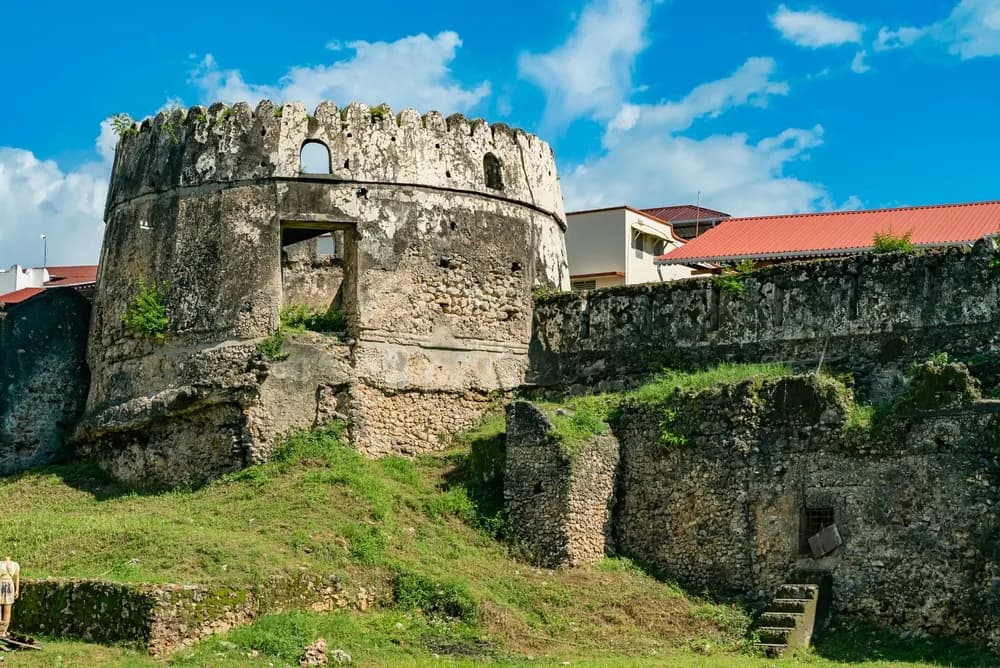
For visitors to Stone Town today, the events of 27 August 1896 are written into the landscape. The House of Wonders — Beit al-Ajaib — which stood near the palace and was the grandest building in nineteenth-century Zanzibar, still stands on the waterfront. The Old Fort, just inland, survived. Walking the narrow streets of Stone Town, it is not difficult to imagine the harbour filled with warships and the sound of shelling rolling across the rooftops.
Where to learn more in Stone Town
The Zanzibar National Museum of History and Culture — housed in the Palace Museum near the seafront — holds exhibits on the sultanic era and the events of 1896. The area around the old palace site and the House of Wonders is compact and walkable. Any knowledgeable Stone Town guide can point out where the palace stood and show you the waterfront from which the bombardment was carried out.
Frequently asked questions
- How long did the Anglo-Zanzibar War last?
- Between 38 and 45 minutes on the morning of 27 August 1896, making it the shortest war in recorded history.
- What caused the Anglo-Zanzibar War?
- A succession dispute: when the British-aligned Sultan Hamad bin Thuwaini died suddenly, his cousin Khalid bin Barghash seized power without British approval, violating an 1886 treaty.
- What happened to Sultan Khalid after the war?
- Khalid fled to the German consulate and was later exiled. He lived in German East Africa and later in Mombasa, eventually returning to Zanzibar decades later.