Stone Town: Start Here
Stone Town, the historic core of Zanzibar City, is the island's cultural heart and a UNESCO World Heritage Site. Its labyrinth of coral-stone alleys took shape over several centuries under Arab, Persian, Indian, and British influence, and the architecture still reflects every layer. The carved wooden doors — some studded with brass spikes, others framed by ornate Indian fretwork — are one of the most photographed features in East Africa.
Start at Forodhani Gardens at dusk, where vendors fire up charcoal grills and sell Zanzibar mix, urojo (a tamarind-and-coconut soup with mixed fritters), fresh sugar cane juice, and grilled octopus for pocket-change prices. The Old Fort (Ngome Kongwe), built by Omani Arabs in the 1690s on the site of a Portuguese church, hosts an open-air amphitheatre and evening craft market. The House of Wonders (Beit el-Ajaib), currently under restoration, was the first building in East Africa with electric light and a lift. The Slave Market Memorial stands on the site of the last open slave market in the Indian Ocean world, closed by the British in 1873; the Anglican Cathedral built over it incorporates a cross made from the tree under which David Livingstone's heart was buried. Budget a full day, ideally two, for Stone Town.
Spice Tours
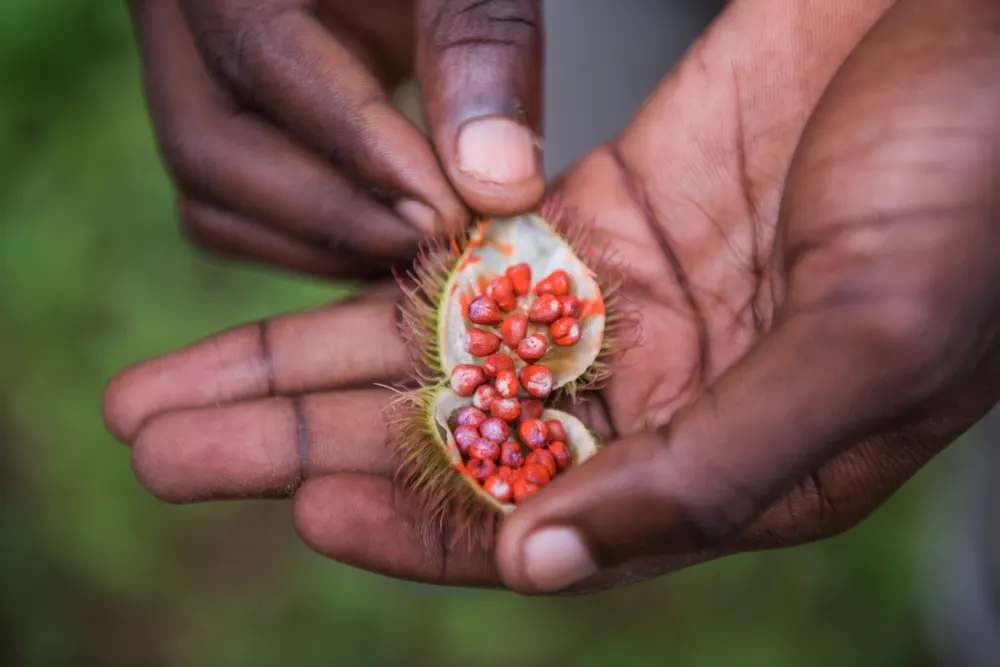
Zanzibar earned the name Spice Island through centuries of clove, nutmeg, cinnamon, black pepper, and vanilla cultivation. Spice tours depart Stone Town every morning (usually 9 am) and visit working farms in the interior where guides identify plants by smell and leaf before you taste raw cinnamon bark, bite into fresh turmeric, and hold clove flowers. Most tours include lunch at the farm and combine with a Prison Island afternoon. Cost is typically $25–40 per person. Look for farms around Kizimbani and Kindichi that still grow heritage varieties.
Jozani Forest and the Red Colobus Monkey
Jozani–Chwaka Bay National Park covers about 50 sq km of groundwater forest in central Zanzibar and is home to the Zanzibar red colobus (Piliocolobus kirkii), found nowhere else on earth. The population is around 4,000 individuals, and a habituated troop reliably visits the forest boardwalk each morning. Guides are mandatory inside the monkey zone. Beyond the colobus, Jozani holds Aders' duiker, Zanzibar leopard (functionally extinct but local stories persist), and over 50 bird species. The mangrove boardwalk through the adjacent tidal forest takes about 30 minutes and is included in the entry fee.
Prison Island (Changuu Island)
A 20-minute dhow ride from Stone Town, Prison Island was built as a detention facility in the 1890s but never formally used as one. Today its main attraction is a sanctuary for giant Aldabra tortoises, some of which are well over 100 years old. You can feed and photograph them, then swim off the island's sandy beach in water that is calm, clear, and very warm. Most tours combine Prison Island with Stone Town sightseeing and cost $30–50 including boat and entry.
Snorkelling at Mnemba Atoll
Mnemba Atoll, a protected marine area off the northeast coast near Matemwe, is widely considered the best snorkelling site in Zanzibar. The reef is healthy, the visibility often exceeds 20 metres, and the fish life is exceptional — hawksbill turtles, Napoleon wrasse, spinner dolphins, and dense schools of anthias and angelfish. Access is by boat from Matemwe or Nungwi beaches (45–60 minutes); day trips cost $50–80 and include snorkelling equipment. The island itself is private (belonging to &Beyond), but the surrounding atoll is open water. Between November and March, humpback whales pass through the channel.
Safari Blue
Safari Blue is a full-day boat excursion operating out of Fumba village in southwest Zanzibar, within the Menai Bay Conservation Area. The trip involves a traditional wooden dhow, two or three snorkelling stops on coral gardens rich with sea turtles and reef fish, a stop on a sandbank that appears and disappears with the tide, and a lunch of freshly grilled fish, octopus, and tropical fruit served on Kwale Island beach. It is justifiably Zanzibar's most popular day tour. Boats leave around 8 am and return by 4 pm. Cost is approximately $70–90 per person including lunch and park fees. Book through your hotel or a Stone Town operator.
The Rock Restaurant
Perched on a coral outcrop in the shallow water off Michamvi Peninsula on the east coast, The Rock is one of the most photographed restaurants in Africa. At high tide, diners arrive by wooden boat; at low tide, they walk across the exposed reef flat. The food — grilled seafood, lobster, octopus curry, fresh coconut dishes — is genuinely good, not just a photo opportunity. Reserve well in advance, especially during peak season (July–August, December–January). Lunch is easier to book than dinner. It seats around 14 people.
Dhow Sunset Cruises
A traditional dhow cruise at sunset is among the simplest and most memorable Zanzibar experiences. Most depart from Stone Town's harbour at around 5:30 pm, drift south along the waterfront as the sky turns orange over the old buildings, and return after dark. Sundowners and light snacks are included in the cost ($30–50). Larger catamarans also offer sunset cruises, but the wooden dhow versions feel more authentic and sit lower in the water.
Kitesurfing at Paje
Paje on the southeast coast is one of the top kitesurfing destinations in the Indian Ocean. The lagoon behind the reef offers flat, shallow water at low tide, while the outer break has waves. Wind is reliable from June to October (southeast trade winds, 15–25 knots) and again from December to March. Several IKO-certified schools operate on the beach — Airborne and Aquaholics are long-established. Beginners can complete a three-day course; experienced riders can hire boards by the day.
Nakupenda Sandbank
Nakupenda ("I love you" in Swahili) is a white sand bar that emerges from the Indian Ocean a short boat ride from Stone Town. At low tide it stretches long enough to walk and feel entirely marooned in blue water. It's typically included as a stop on Prison Island day trips, or can be arranged as a standalone excursion. Bring sunscreen, because shade is nonexistent. Best visited on a morning low tide.