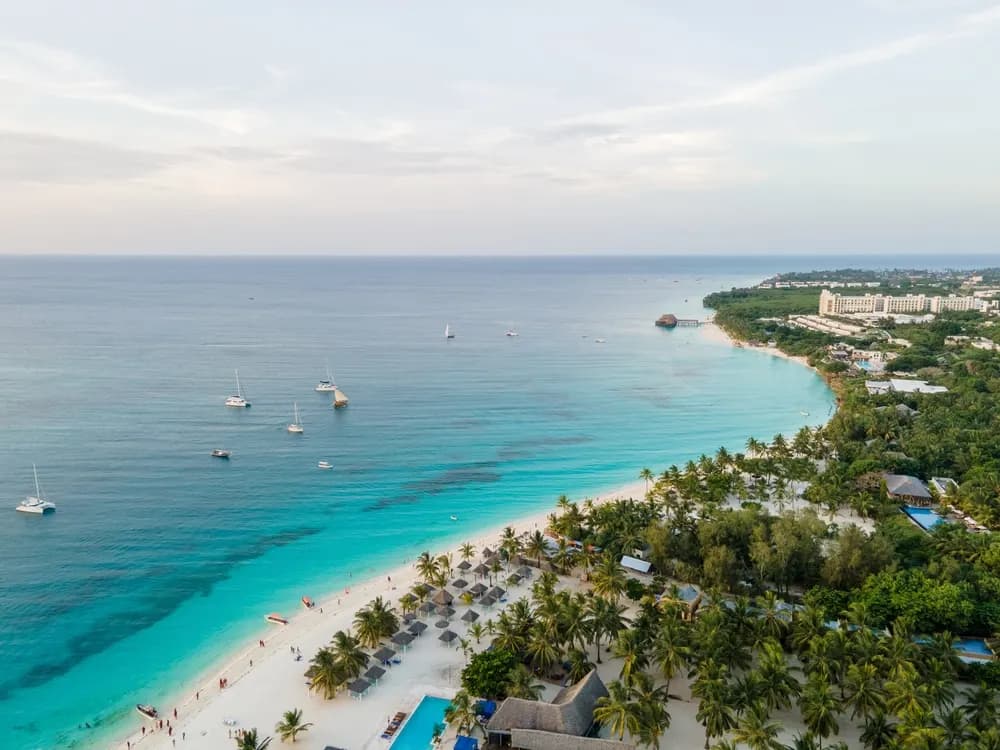
What Mnemba Island and Its Atoll Are
Mnemba is a small, privately leased island sitting roughly two kilometres off Zanzibar's northeast coast, near the village of Matemwe. The island itself is home to the exclusive &Beyond Mnemba Island Lodge and is entirely off-limits to day visitors. What draws the wider public — and makes Mnemba famous across East Africa — is the circular coral reef that rings it: Mnemba Atoll, a gazetted marine conservation area and the finest snorkelling and diving site in the Zanzibar Archipelago.
Marine Life and the Reef
The atoll supports one of the healthiest coral ecosystems in Tanzanian waters. Hawksbill and green sea turtles are a near-certain sighting; they feed and rest on the reef throughout the year. Reef fish are abundant and diverse — parrotfish, surgeonfish, moorish idols, angelfish, and schools of fusiliers patrol the coral heads. Moray eels, octopus, and white-tip reef sharks are regular encounters in the deeper sections. Spinner dolphins are frequently spotted in the channel on the way out, and seasonal visitors include whale sharks during the October–February period, though sightings are not guaranteed.
Visibility at Mnemba regularly exceeds 20 metres in calm conditions. Water temperature stays between 26 °C and 30 °C year-round, making a wetsuit unnecessary for most visitors.
How to Visit the Atoll
Access is by boat from Matemwe or Nungwi — you snorkel or dive the outer reef; landing on the island is not possible. Most tours are half-day and include round-trip boat transfer, a briefing from a guide, snorkelling equipment, and the mandatory atoll permit fee. PADI-certified dive centres in Matemwe and Nungwi run structured dive trips for certified divers, reaching depths of 10–25 metres depending on the site. Freediving trips are also available through specialist operators.
Best Time to Go
June through October and December through February bring the clearest water and calmest sea conditions. The long rains in April and May and the short rains in November can reduce visibility and cause some boat trips to be cancelled. Book early in peak season (July–August) as atoll permits are capped daily.