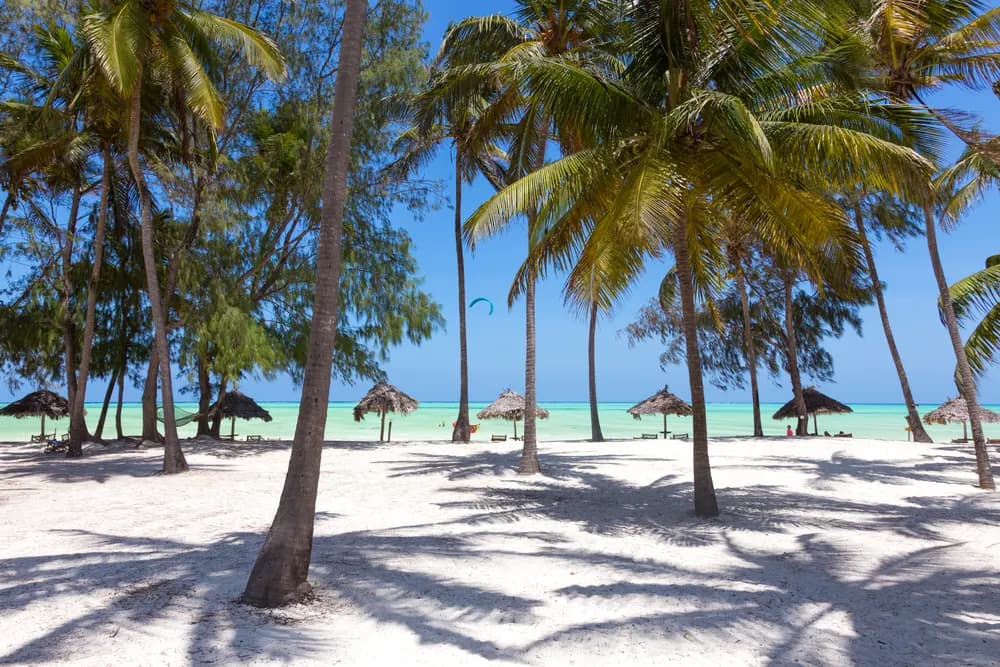
Overview
Paje is unlike any other beach on Zanzibar. Sitting on the exposed southeast coast, it receives the full force of the Indian Ocean's Kaskazi and Kusi trade winds, transforming a wide, flat stretch of sand into one of the best kitesurfing venues on the African continent. The village has grown around that wind, filling with kite schools, surf-shack cafés, yoga decks, and a cosmopolitan backpacker crowd that gives it a distinct energy.
The Beach and Tides
The tidal range at Paje is dramatic. At high tide the beach is narrow and the turquoise lagoon fills beautifully — perfect for snorkelling the nearby reef. At low tide, the water withdraws dramatically, sometimes leaving hundreds of metres of exposed, rippled sand and seagrass beds. The exposed flat is great for learning to fly a kite body or riding a sandboard, but swimming requires timing your visit with the tidal cycle. Tide tables from local kite schools or apps like Tides Near Me are essential planning tools here.
Kitesurfing
Paje has several IKO-certified kite schools — Airborne Kite Center and Zanzibar Kite Paradise are the longest-established. Lessons run from beginner discovery sessions (typically on land and in shallow water) through to advanced water-start and freestyle instruction. Equipment rental is widely available. The flat-water lagoon inside the reef is ideal for beginners and intermediate riders; more experienced kiters chase the break outside the reef in stronger conditions.
Where to Stay and Eat
Paje caters primarily to independent travellers and kiters. Drifters, Paje by Night, and Hakuna Majiwe offer everything from dormitory beds to small private bungalows. Baraka Natural Pool is a popular evening gathering point. Food options lean toward fresh fish tacos, smoothie bowls, and pizza — reflecting the international crowd more than Swahili tradition, though local mama's kitchens in the village serve excellent biryani and coconut-bean stew.
Getting There
From Stone Town, Paje is about 55 kilometres southeast — roughly 60 minutes by taxi or dala-dala (Route 309/324 via Tunguu). The road is sealed all the way. Shared transfers with other kite guests are common and can reduce per-person costs significantly.