Overview
A beachfront hotel in Zanzibar does not automatically mean the sea will be at your door at all hours. Zanzibar's significant tidal variation is one of the most important practical factors when choosing where to stay, and one that property marketing rarely addresses clearly. Understanding how tides interact with different stretches of coast helps set realistic expectations and avoid disappointment.
Most properties use "beachfront" to indicate a direct sand-to-property relationship — no road, no other building between them and the beach. This is a meaningful distinction from properties set back in gardens or behind a road, but it says nothing about whether the water is swimmable at any given time.
The north coast advantage
Nungwi and Kendwa, at the island's northern tip and just south of it respectively, benefit from a seabed configuration that drops away relatively steeply from the shoreline. The result is that water stays at a swimmable depth throughout the tidal cycle rather than retreating far out. For travellers whose primary goal is beach swimming, the north coast is generally the most dependable choice. Properties here are directly on the beach in the literal sense, and many are only steps from water regardless of the tide.
The east coast and Paje
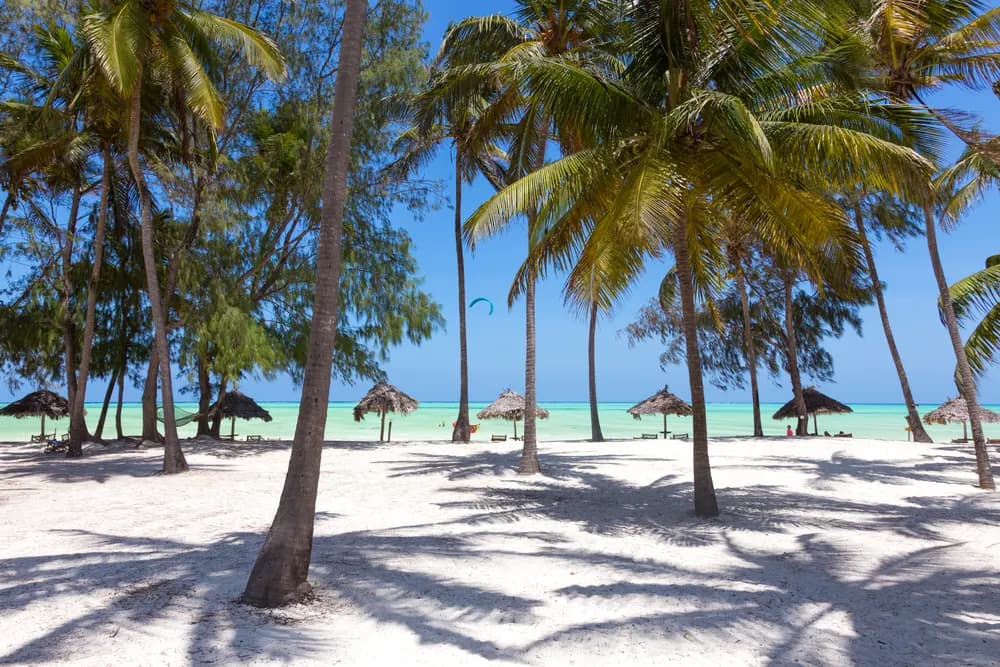
Paje and the wider south-east coast offer some of Zanzibar's most visually striking beaches — long, wide, palm-lined stretches of fine sand. At high tide, conditions are excellent for swimming and the scenery is hard to match. At low tide, a shallow sandy lagoon is revealed, which suits wading but not swimming. This same lagoon creates the conditions that make Paje one of the Indian Ocean's best kite-surfing destinations, so the tidal rhythm here is a feature for some and an inconvenience for others.
Who it suits
Travellers prioritising daily sea swimming above all else should focus on the north coast. Kite-surfers and those content to swim at tide-dependent times will find the east coast's beach quality and generally lower prices compelling. Beachfront properties in Stone Town exist too, along the Forodhani waterfront, though the water there is not clean enough for swimming — the appeal is position and culture rather than beach access.
Good to know
Seagrass is present on parts of Zanzibar's coast and can affect the swimming and wading experience. The north and north-west coasts generally have sandier seabeds, while seagrass is more common on some east coast shallows. Checking satellite images of the specific bay a property fronts onto gives a clearer picture than written descriptions alone.