The area
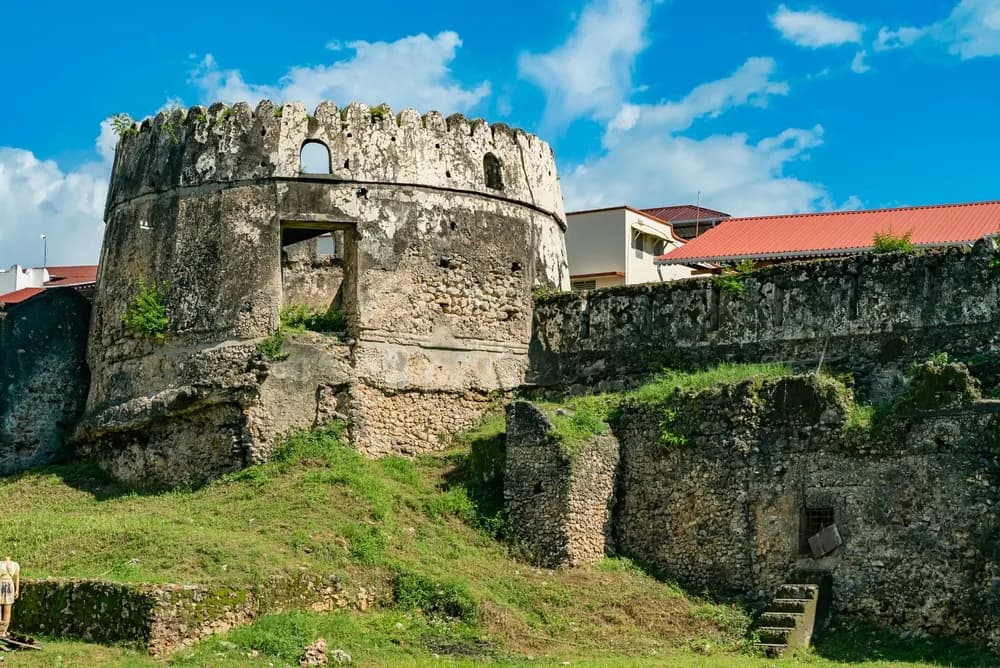
Stone Town is the old quarter of Zanzibar City, a UNESCO World Heritage Site and one of the best-preserved Swahili trading towns in East Africa. Its streets are narrow enough that cars cannot pass — navigation is on foot, by bicycle, or by the occasional motorcycle. The architecture layers Arab, Indian, Portuguese, and British colonial influence into a dense, walkable district of carved wooden doors, colonnaded merchants' houses, mosques, a Hindu temple, an Anglican cathedral, and the ruins of a slave market.
Forodhani Gardens, on the waterfront, becomes an open-air street food market each evening and is as much a social institution as it is a place to eat. The old fort, the Palace Museum, and the Freddie Mercury Museum all sit within easy walking distance of virtually any property in the area.
The accommodation scene
Accommodation here is almost exclusively in the boutique and guesthouse category. Large resort-style hotels are not present; the buildings and the urban fabric simply do not allow them. What exists instead is a spectrum of restored merchant houses converted into hotels, ranging from simple family-run guesthouses with ceiling fans and shared bathrooms to polished properties with rooftop pools, air conditioning, and considered period décor.
The best rooms in Stone Town tend to have character that purpose-built beach hotels cannot replicate: original carved plasterwork, four-poster beds under muslin, views over tiled rooftops toward the harbour. The trade-off is that some buildings are genuinely old, and room sizes, ventilation, and noise levels vary considerably within a single property.
Who it suits
Stone Town suits travellers who prioritise culture over coastline. First-time visitors to Zanzibar often spend one or two nights here to orient themselves before moving to a beach area — and a final night here before an early morning flight is a practical choice. History enthusiasts, architecture lovers, and independent travellers comfortable with navigating maze-like streets on foot tend to get the most from basing themselves here.
It is less suitable for families or couples whose primary goal is the beach, simply because the beach is not here. The city is safe and lively but also humid and, in some pockets, noisy after dark.
Getting here and around
The ferry terminal and Zanzibar's main airport are both within a short taxi or tuk-tuk ride. Stone Town itself is best explored on foot. Taxis and ride-hailing apps provide connections to the north and east coast beach areas, with journey times ranging from 45 minutes to just over an hour depending on traffic and destination.