Overview
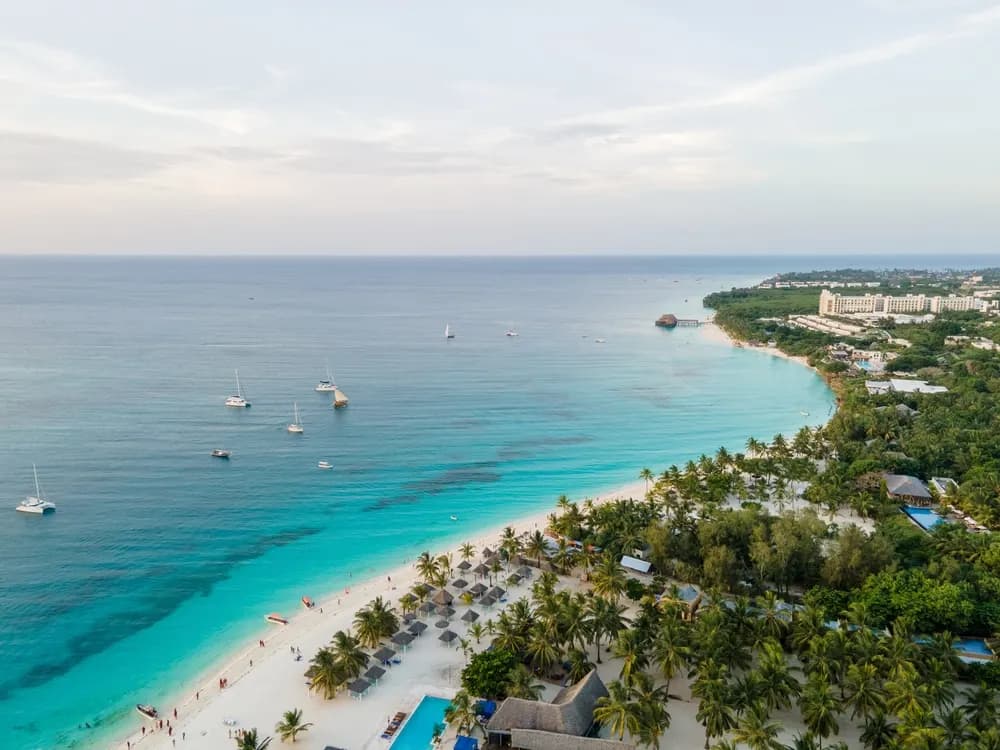
Zuri Zanzibar is a design-led resort on the island's northwest coast, positioned between Kendwa and Nungwi on a stretch of shoreline that benefits from one of the north coast's defining advantages: a deep-water seabed that keeps the beach swimmable at most tidal states. The property is smaller and more architecturally deliberate than the large all-inclusive resorts that characterise much of the Kiwengwa and Pwani Mchangani coastline further south.
The resort's aesthetic draws on natural materials — driftwood, coral stone, thatch — assembled with a considered, contemporary eye. It reads as a design hotel that happens to be in a tropical setting rather than a tropical hotel with some design touches.
The setting
Bungalows are set within mature garden grounds rather than in tight rows facing the sea, which gives the property a more spread-out, green feel than many beach resorts its size. Some accommodation looks directly to the ocean; others are positioned within the garden but connected to it by short paths. The beach itself is the northwest coast's characteristic white sand, with the Zanzibar Channel — and sunsets over it — as the backdrop.
Zuri's eco commitments are woven into the physical property: solar installations, rainwater harvesting, and the use of locally sourced timber and stone are part of the design story rather than an afterthought.
Who it suits
The property appeals to travellers who want comfort and considered design without the scale and impersonality of a large resort. Couples, honeymooners, and design-conscious guests who want a quieter corner of the north coast rather than the livelier areas around central Nungwi typically find Zuri a good fit.
Guests who value environmental credentials alongside physical comfort — and who want those credentials to be substantive rather than token — will find Zuri more convincing on this front than most of its northwest coast neighbours.
Good to know
The northwest coast is on the sheltered side of the island, which gives it calm water conditions for much of the year, particularly during the kaskazi season (the north-easterly trade wind period from November to March). The south-east kusi winds bring rougher water and some overcast days between June and August, though this is also the coolest and often least crowded period to visit the island.