What is Prison Island?
Changuu Island — almost universally known as Prison Island — sits about five and a half kilometres northwest of Stone Town, close enough that you can see the Stone Town waterfront from its beach. It is a small, wooded island roughly 800 metres long, with a white coral beach on its western shore, clear turquoise water, and the remains of a substantial colonial building set back among the trees. The building, and the island's misleading name, have a specific and somewhat ironic history.
The building that never served as a prison
In 1893, the Arab general Lloyd Mathews — who served in the Zanzibar government under the sultan — acquired the island with the stated intention of using it as a prison for troublesome or rebellious enslaved people. The substantial stone structure on the island was built or significantly expanded around this period for that purpose. However, the prison never actually operated as one. No inmates were ever held there in a penal capacity. The building was completed but the function was abandoned almost immediately.
Instead, the structure was repurposed as a quarantine station for mainland Africa by the British colonial administration. In an era when steamship travel was accelerating the spread of infectious disease, quarantine stations were a serious public health tool. Zanzibar, as a major transit point in the western Indian Ocean, was a logical location for one. Passengers arriving in East Africa by sea who showed signs of illness — particularly yellow fever — could be held at Changuu to prevent disease from reaching the mainland.
The quarantine station functioned into the early twentieth century. The old building, now in partial ruin, is still visible on the island and gives the site much of its atmospheric character. Some sections have been restored or maintained.
The Aldabra giant tortoises
Today, the main attraction is not the building but the tortoises. Changuu is home to a sizeable colony of Aldabra giant tortoises (Aldabrachelys gigantea), the same species found on the Aldabra Atoll in the Seychelles — one of the largest land tortoises in the world. Individuals can weigh over 200 kilograms and live for well over a century, with some animals on Changuu believed to be more than a hundred years old.
The colony's origin traces to 1919, when four tortoises were gifted to Zanzibar by Sir Claud Hollis, the British Resident of the Seychelles. The population grew steadily over the following decades, partly through births and partly through additional donations. By the late twentieth century, numbers had declined significantly due to poaching and theft of animals, but conservation efforts have since stabilised and grown the colony. Today there are dozens of tortoises on the island, roaming relatively freely in an enclosed area near the old quarantine building.
Visitors can walk among the tortoises, and it is generally possible to feed them and interact with them at close quarters. They are entirely accustomed to human presence and move with the unhurried confidence of animals that have no natural predators on the island. The combination of their size, age, and apparent indifference to the humans around them makes for an unexpectedly affecting encounter.
Getting there and what to expect
Changuu Island is reached by boat from the Stone Town waterfront — typically from the area near the port. The crossing takes around 20 to 30 minutes depending on the vessel and conditions. Boats can be arranged through hotels and guesthouses, or directly from the harbour; the latter is usually cheaper, though negotiation is standard. Many operators offer a combined package that includes time on the island and snorkelling nearby, which is worth considering since the reefs around Changuu are healthy and the water is generally clear.
There is an entry fee to access the island, which covers the tortoise sanctuary. The fee structure has changed over the years, so check current rates before you go. The facilities on the island include basic refreshments and toilet facilities. There is no elaborate tourism infrastructure — this is part of its appeal.
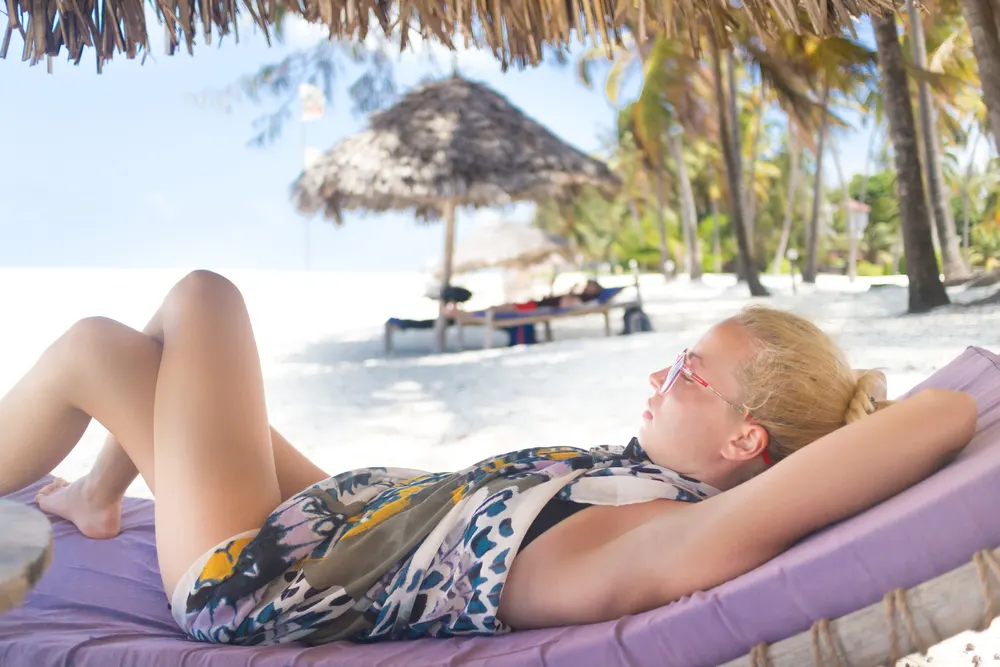
The beach on the western side is suitable for swimming in calm conditions, with shallow water close to shore and a sandbar not far out. Snorkelling equipment can be rented from boat operators if you do not bring your own.
When to visit
Changuu can be visited year-round, but the crossing is most comfortable in calm sea conditions — broadly the dry season from June to October and the short dry period between December and February. In the long rains (March to May), the crossing can be choppy and the island itself is very quiet. A half-day is sufficient for most visits: an hour or so with the tortoises and the ruins, time on the beach or in the water, and the return crossing. Combining it with a Stone Town exploration makes for a full day.