What is a Spice Tour?
Zanzibar's reputation as the Spice Island is rooted in real history. Arab traders and later the Omani Sultanate turned the island into one of the world's leading producers of cloves from the nineteenth century onwards. Today the fertile interior still grows a remarkable range of spices and tropical plants, and a guided visit to a working farm is the most direct way to understand that heritage.
Spice tours typically take half a day and combine a guided walk through plantation land with tastings, explanations of each plant's history, and demonstrations of how spices are harvested and processed.
What to Expect
Guides lead small groups along shaded paths between trees and shrubs, identifying plants by breaking off a leaf or slicing open a fruit. The range of what you encounter is broad: clove trees heavy with bud clusters, vanilla orchid vines trained up wooden poles, nutmeg fruit split to reveal the crimson mace inside, and cinnamon bark peeled to release its immediate scent. Lemongrass, turmeric, black pepper, cardamom, and ylang-ylang all feature on most tours.
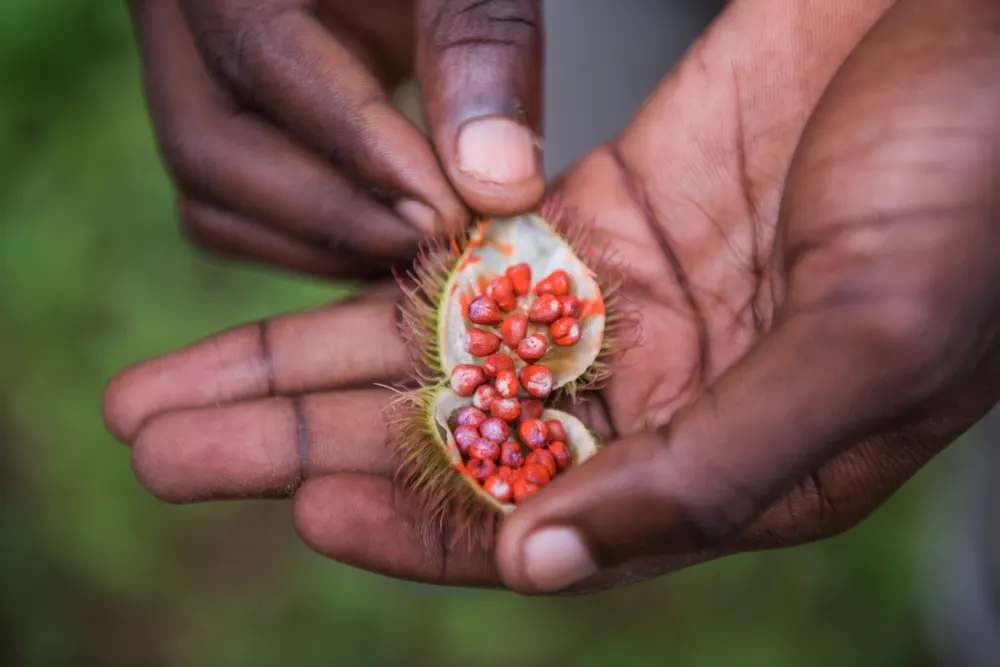
One of the most memorable moments involves annatto, also called lipstick fruit — the guide scrapes the vivid red-orange pigment from the seed pods and demonstrates how it was used as a cosmetic and dye long before synthetic food colouring existed. Guides at well-run farms are deeply knowledgeable, weaving in historical context about the slave trade, the Omani Sultanate, and the economic rise and fall of the clove trade alongside the botanical explanations.
The walk usually ends with a tasting session and the chance to buy dried spices directly from the farm. Some tours include a simple lunch of spiced rice and stew prepared using local ingredients.
Good to Know
Spice tours are commonly combined with a morning visit to Stone Town, making a full-day itinerary. Wear shoes suitable for uneven ground and bring insect repellent — the shaded farm interior can harbour mosquitoes. The best time to visit is when rainfall has been recent enough to keep the vegetation green, but the tours run year-round. Clove harvest peaks between July and September if you want to see the picking process in action. Most tours are arranged through accommodation or Stone Town agencies.