What is Stone Town?
Stone Town is the historic centre of Zanzibar City and a UNESCO World Heritage Site. Its dense grid of narrow coral-stone lanes contains mosques, Hindu temples, bathhouses, merchant mansions, and a harbour front that has served Indian Ocean trade for centuries. A walking tour is the only practical way to explore it — the streets are too narrow and intricate for vehicles — and a knowledgeable guide transforms what might otherwise look like a maze into a coherent story about trade, colonialism, and cultural exchange.
What to Expect
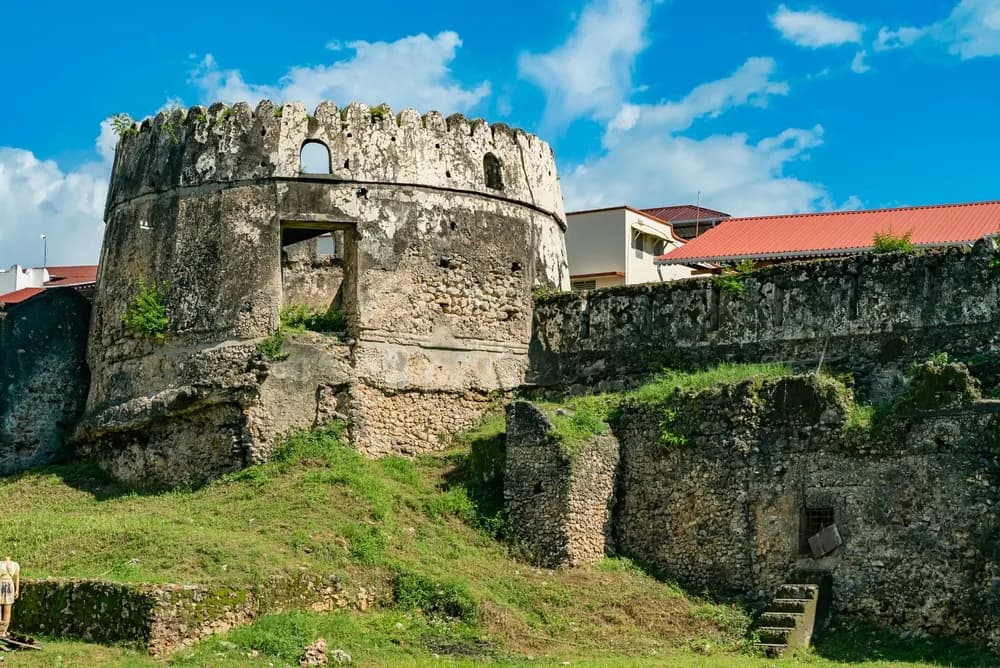
Most guided walks begin at the waterfront near the Old Fort (Ngome Kongwe), the oldest surviving building in Stone Town, built by Omani Arabs in the late seventeenth century on the site of a Portuguese chapel. Adjacent to it stands the House of Wonders (Beit al-Ajaib), once the grandest palace on the East African coast, notable for being the first building in Zanzibar to have electric lights and an elevator. It has been undergoing restoration following partial roof collapse in 2020.
The route moves through the tangle of alleys where the carved wooden doors of merchant houses are one of Stone Town's defining features — Indian-style doors typically have rounded tops and intricate floral carvings, while Arab-style doors are square-headed and studded with brass spikes. Guides explain the social and commercial messages embedded in each style.
The former slave market and Anglican Cathedral stands on the site where East Africa's largest slave market operated until 1873. The cathedral altar is positioned where the whipping post once stood. A small underground chamber below the site — where enslaved people were held — can be visited. The nearby Darajani market is a working neighbourhood market selling fish, meat, fruit, and vegetables. The tour often ends at Forodhani Gardens on the waterfront, where food stalls open each evening serving grilled seafood, sugarcane juice, and Zanzibar pizza.
Good to Know
Morning is the most comfortable time for a walking tour before temperatures rise. Modest clothing is recommended out of respect for the predominantly Muslim community. Friday midday sees the streets quiet as many residents attend prayers. The areas around Darajani can be bustling and crowded — keep bags close. Tipping guides directly at the end of the tour is the norm.