A cuisine built on spice and ocean
Zanzibari food is the product of geography and history combined. The islands sit on what was once the most important spice-trading route in the western Indian Ocean, and for centuries merchants from Arabia, India, Persia, and Portugal passed through or settled here, each leaving something in the kitchen. Add a warm climate that produces coconuts, cassava, plantain, and tropical fruit in abundance, and an ocean filled with tuna, snapper, kingfish, octopus, and lobster, and the result is a cuisine unlike anything you will find on the East African mainland.
The foundation is Swahili cooking — a tradition that belongs to the coastal people of East Africa and blends African, Arab, and South Asian influences into something distinctly its own. In Zanzibar, that base is enriched further by the island's specific spice heritage: cloves, black pepper, cinnamon, cardamom, turmeric, and nutmeg are not exotic imports here but local crops grown in the island's interior.
Pilau and biryani
If you eat one rice dish in Zanzibar, make it pilau. Pilau rice is cooked in spiced stock with whole spices — cloves, cinnamon, cardamom, black pepper, and cumin — often with beef or chicken, and then finished until each grain is separate and deeply fragrant. It is a celebratory dish, served at weddings and religious occasions, but it appears in local restaurants throughout the week. It is not the lightly perfumed pilaf of the Middle East; Zanzibari pilau is assertively spiced, intensely savoury, and satisfying in a way that lingers.
Biryani is also widely eaten, particularly during Eid and other Islamic festivals. The Zanzibar version uses layers of spiced rice and meat, with the whole pot slow-cooked so the flavours consolidate. It is richer and more complex than many mainland versions.
Urojo: the Zanzibar mix
Urojo — known colloquially as Zanzibar mix — is one of the most important and distinctive street foods on the island. It is a soup, or more precisely a broth, made from a base of mung bean or lentil flour cooked with tamarind, spices, and coconut, which gives it a sour, warming character. Into this broth go an array of accompaniments: bhajia (fried lentil or potato fritters), sliced boiled potato, fried cassava, banana, boiled egg, sometimes grilled meat or kebab, and a splash of coconut chutney. You eat it from a bowl, mixing everything together so the broth soaks into the fritters and the textures collapse pleasingly into one another.
Urojo is particularly associated with the Forodhani night market and with local cafes in Stone Town, where it is eaten as an evening meal or substantial snack. It rewards eating slowly.
Zanzibar pizza
Despite the name, Zanzibar pizza has nothing to do with Italy. It is a street food creation: thin dough, almost like a crêpe, is stretched out on a flat griddle, filled with a mixture of egg, minced meat, vegetables, cheese, or — for the sweet versions — banana or chocolate, then folded over and fried flat in oil until the exterior is crisp and golden. The result is a hot, portable parcel that is greasy, filling, and excellent eaten standing up at a market stall.
Zanzibar pizza was apparently developed or popularised by vendors at Forodhani and has since spread to other markets and street corners around the islands. It is a good example of Zanzibar's creative street food culture, where Indian, Arab, and African techniques come together in something that belongs entirely to the island.
Seafood
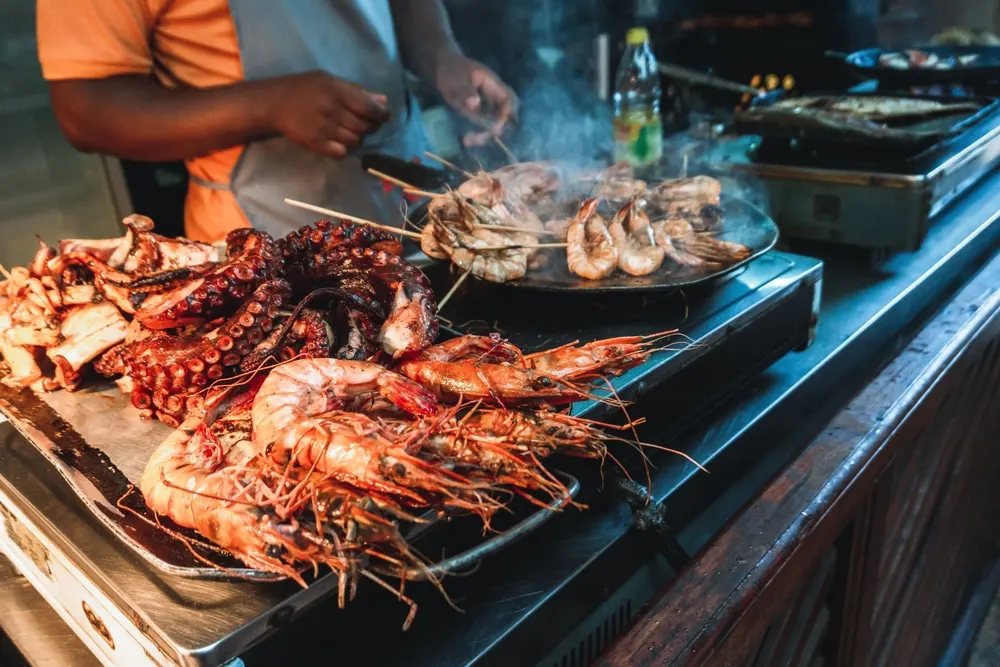
The ocean provides and Zanzibari cooking reflects it fully. Grilled octopus is a staple at Forodhani — whole octopus are prepared earlier in the day and grilled over charcoal to order, served with lime and chilli. Kingfish is eaten in curries, grilled whole, or dried. Tuna is abundant. Lobster appears on hotel menus and at upmarket restaurants, though prices reflect demand from tourist visitors.
Coconut-based seafood curries, cooked with fresh coconut milk, turmeric, ginger, and chilli, are central to home cooking and found in local restaurants. They are milder than South Asian curries in terms of heat but deeply aromatic.
Street food and everyday eating
Beyond the centrepiece dishes, everyday Zanzibari eating involves chapati — the griddle-fried flatbread that arrived via South Asian communities and became a staple — and mandazi, a mildly sweet, lightly spiced fried dough eaten for breakfast or as a snack with tea or coffee. Cassava is boiled or fried and eaten as a simple accompaniment. Sugarcane juice, pressed fresh at roadside stalls, is one of the island's great pleasures: cold, sweet, and faintly grassy.
Forodhani Gardens night market
Forodhani Gardens on the Stone Town waterfront is the centre of Zanzibar street food culture. Every evening from around sunset, vendors set up stalls and grills along the seafront, and the market becomes a social event as much as a food market. Grilled seafood, Zanzibar pizza, urojo, sugarcane juice, and various snacks are all available. It is informal, lively, and inexpensive. For first-time visitors to Zanzibar, spending an evening at Forodhani is one of the most direct ways into local food culture.