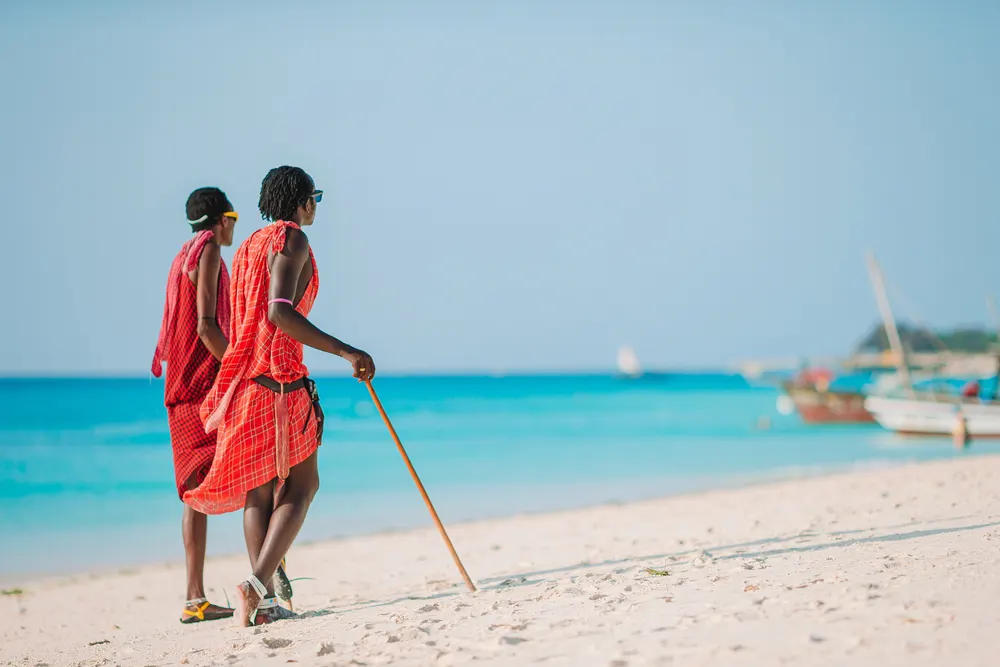
A people shaped by the sea
The people of Zanzibar are the product of one of the world's longest-running crossroads cultures. For more than a thousand years, the monsoon winds of the Indian Ocean brought traders, settlers, and sailors to these shores from the Arabian Peninsula, Persia, the Indian subcontinent, and the African interior. The result is a population that carries multiple heritages simultaneously — African, Arab, Persian (Shirazi), and South Asian — without most residents drawing sharp distinctions between them. The unifying thread is Swahili culture, which absorbed all of these influences and made something distinct from any of them.
The archipelago's population is approximately 1.9 million, with Unguja (the main island) home to the vast majority. Pemba Island is more rural and less visited, with a population of several hundred thousand. Stone Town, the historic capital on Unguja's western coast, is the cultural and commercial heart of the archipelago.
The Bantu foundation
The oldest layer of Zanzibar's population is Bantu-speaking African, related to the Swahili-speaking peoples of the East African coast. Archaeological evidence suggests continuous settlement on Unguja for at least 2,000 years. These early communities fished, farmed, and traded with passing vessels, gradually developing the Swahili language — a Bantu language in its grammar and core vocabulary — through contact with Arabic and other languages.
The Hadimu and Tumbatu are among the indigenous groups associated with Unguja, and the Shirazi — a group claiming origins in Shiraz, Persia, though the historical reality of this migration is debated by scholars — are another longstanding community. On Pemba, the Pemba people have their own distinct local identity within the broader Swahili world.
Arab and Persian heritage
Arab traders from Oman and the wider Gulf established a profound presence on Zanzibar from at least the 10th century CE. By the 17th century, the Omani Sultanate had significant political influence on the Swahili coast, and in 1832 Sultan Seyyid Said moved his court from Muscat to Zanzibar, making the island the capital of the Omani empire's East African dominions. This brought a large Arab settler class, and the architecture of Stone Town reflects their presence: carved wooden doors, inner courtyards, rooftop terraces, and the general layout of the old city all derive from Arab-Swahili building traditions.
The blending of Arab and local Swahili culture over centuries produced what is now called the Zanzibari or Swahili Arab identity — not straightforwardly "Arab" in the way the Gulf states understand it, but shaped deeply by Arab language, religion, and aesthetic traditions.
South Asian heritage
The Indian subcontinent contributed another significant layer to Zanzibar's culture, primarily through Gujarati-speaking Hindu and Muslim traders who settled as merchants and craftsmen during the Sultanate period. The Indian community ran much of the commercial economy of the 19th-century Zanzibar entrepôt, and their architectural contributions — certain building facades, commercial structures, and the general bustle of the Stone Town market — are still visible. The Hindu temple near Stone Town's main port area is a surviving marker of this community.
After independence, many South Asian Zanzibaris emigrated following the 1964 revolution, but Indian cultural influence on cuisine (the biryani tradition, the spice trade, the masala of everyday cooking) and on commercial culture remains very present.
Islam and daily life
Approximately 99% of the population of Unguja and Pemba is Muslim, making Zanzibar one of the most consistently Islamic societies in sub-Saharan Africa. The call to prayer from numerous mosques punctuates the Stone Town soundscape five times daily. Ramadan is observed seriously, with daytime food and drink abstained from by the great majority of residents; restaurants and street food stalls in non-tourist areas close during daylight hours, and the pace of daily life adjusts.
Women across Zanzibar typically wear the buibui — a black outer garment worn over everyday clothes in public — though practices vary between generations and between the more urban Stone Town and rural communities. Men often wear the kanzu, a white ankle-length robe, especially for Friday prayers. These are everyday garments, not costumes; visitors should recognise them as such.
Kiswahili: the language of the coast
Kiswahili is the first and primary language of Zanzibar, and its particular variety — sometimes called Kiunguja — is considered a prestige form of Swahili and has historically been the source of standardised Swahili used in education and media across East Africa. Swahili is the national language of Tanzania and Kenya, and it is spoken by perhaps 200 million people across the continent as a first or second language. For Zanzibaris, it is simply the language of home.
Customs for visitors
A few things matter: Zanzibar is not a beach resort in isolation — it is a living society with deep religious traditions. Entering mosques requires modest dress. Walking through Stone Town in beachwear is considered disrespectful. During Ramadan, eating or drinking in public during daylight hours should be avoided. Greetings matter — "Habari?" (How are you?) answered with "Nzuri" (Fine) is the standard exchange, and making the effort to greet people in Swahili is warmly received.