The shape of Zanzibar dining
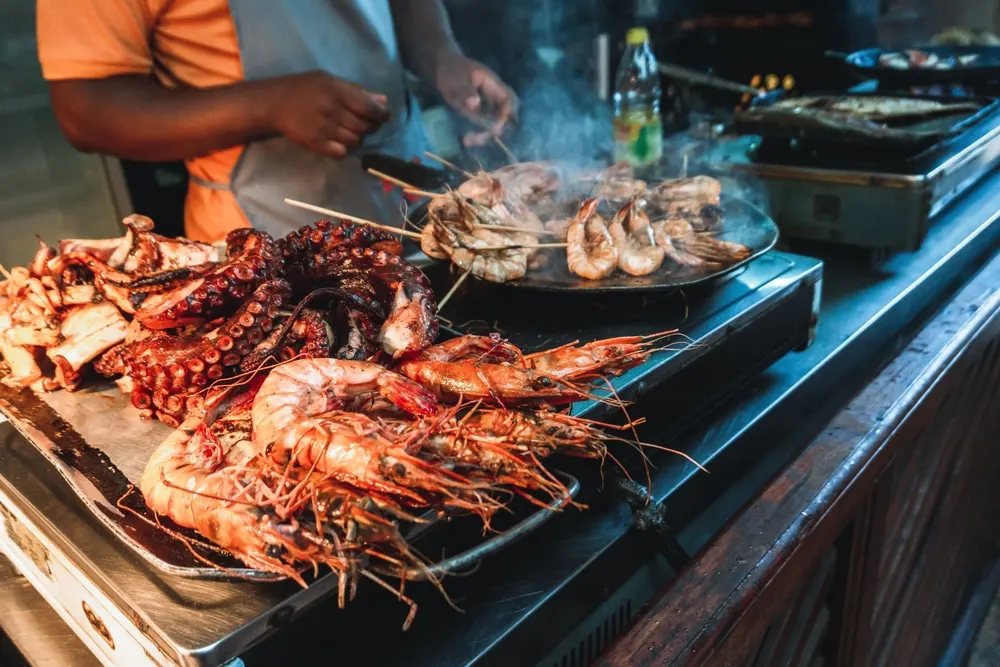
Eating in Zanzibar does not follow a single pattern. At one end of the spectrum is the Forodhani night market, where you eat standing up for a few dollars, surrounded by smoke from charcoal grills and the sound of the waterfront at evening. At the other end are rooftop restaurants in Stone Town with candlelit tables, cold beer, and views over terracotta rooftops to the ocean. Between those two poles is everything from local cafes serving pilau and beans to beachside grills where the catch of the day is laid out on ice for you to choose.
Understanding that range helps you eat well at every price point. Zanzibar rewards travellers who are willing to eat where locals eat — the food is often better and always more direct. But the island also has genuinely good restaurants that have mastered Swahili cooking and present it with care.
Forodhani Gardens: the essential starting point
For almost every visitor to Stone Town, eating at Forodhani Gardens at least once is non-negotiable. The night market sets up along the waterfront every evening as the sun drops, and by full dark it is busy and atmospheric. Vendors sell grilled octopus, Zanzibar pizza (thin dough fried around an egg and meat filling), urojo soup with fritters and accompaniments, sugarcane juice, fresh fruit, skewers, and a rotating cast of other snacks. You point, you pay a small amount, and you eat while watching the harbour.
Food quality at Forodhani is generally good at the stalls with the most traffic. The grilled octopus — prepared earlier and finished over charcoal — is a highlight. Zanzibar pizza is made to order and eaten immediately. Prices are low by any measure. The market is open to everyone, locals and visitors alike, and it is best understood as a social space as much as a food market.
Stone Town rooftops and sit-down dining
Stone Town has a range of sit-down restaurants, many of them oriented toward visitors but serving genuinely good food. Rooftop restaurants have become a particular Stone Town signature: tables set on the flat roofs of old Arab merchant houses, with views over the irregular skyline of carved wooden doors, coral-stone walls, and minarets. In the evening, with a breeze coming off the ocean, this is one of the better ways to spend a few hours in Zanzibar.
Menus in Stone Town restaurants tend to emphasise Swahili and Indian Ocean seafood cooking: coconut curries, grilled fish, pilau, biryani, and fresh seafood. Many also serve international dishes — pasta, pizza, sandwiches — aimed at visitors less comfortable with local food, though these are rarely the kitchen's strongest offering. Seafood is generally very fresh given the obvious proximity to source.
Local cafes and hole-in-the-wall eating
Away from the tourist-facing restaurants, Stone Town has a network of small cafes and local eating places, often very plain in appearance, that serve the food ordinary Zanzibaris eat daily. A typical lunch spread might include rice with beans, a fish or chicken stew, chapati, and ugali. Prices are very low. These places often close after lunch or in the early afternoon since the main local meal is at midday.
Exploring the side streets away from the main tourist corridors in Stone Town is the best way to find these cafes. The morning market area and the streets around it tend to have the highest concentration. Bhajia — fried lentil fritters — are widely available as street snacks throughout the day.
Beach dining on the north and east coasts
The beach areas — particularly Nungwi and Kendwa on the north coast, and Paje and Jambiani on the southeast — have developed their own dining scenes. Beachside restaurants serve fresh seafood, generally cooked simply: grilled whole fish, lobster when in season, calamari, and prawn dishes. The setting — plastic chairs in the sand, the Indian Ocean immediately in front of you — tends to compensate for any culinary ambition that might be lacking.
Some beach areas have built more polished dining options, with proper restaurants attached to boutique hotels open to non-guests. These tend to offer the most consistent cooking outside Stone Town.
Dietary considerations and practical notes
Zanzibar is a predominantly Muslim island and pork is not widely available. Alcohol is served in tourist-facing restaurants and hotel bars but is handled with discretion — you will not find it at local cafes. Seafood dominates menus wherever you eat. Vegetarians and pescatarians eat very well. Vegans have more of a challenge at local places but can generally be accommodated in tourist-oriented restaurants.
Water: drink bottled water throughout Zanzibar. Ice at established restaurants is generally fine; at street stalls, use your judgement.
The dining scene is at its most varied and energetic from June to October during peak season. During the long rains in March and April, some restaurants reduce hours or close temporarily.